Fit & Sizing
How to Measure Your Waist for Pants Without Guessing
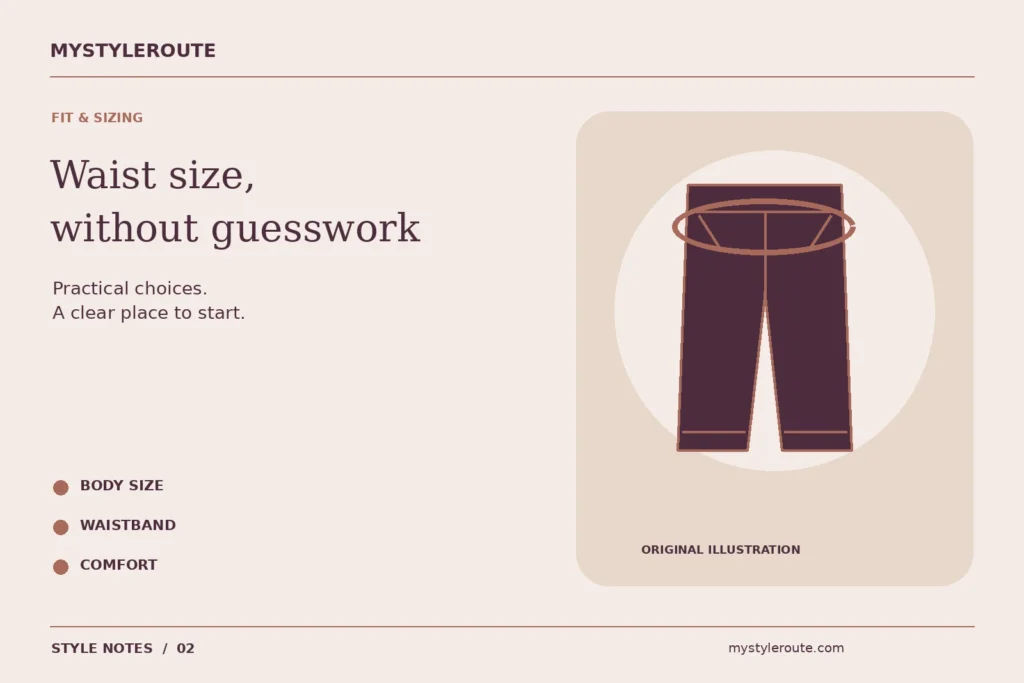
To measure your waist for pants, first find out whether the size chart wants your body circumference or the dimensions of a finished garment. A flat waistband measured across the front is not the same thing as a body measurement. Mixing the two is an easy way to order the wrong size.
A labeled size is another separate piece of information. Numbers vary between brands and cuts, and a low-rise waistband sits in a different place from the natural waist. Start with measurements, then evaluate the rise and intended ease.
Take a relaxed body measurement
Use a flexible measuring tape over light clothing or underwear. Follow the retailer's location instructions. For example, Levi's describes measuring around the natural waist. Stand normally, keep the tape level and let it touch the body without squeezing. Breathe naturally rather than holding your stomach in.
Take a second reading and record the unit. If the chart asks for hips as well, measure that separately around the stated fullest point. A waistband that fits does not establish that the seat and thighs will be comfortable.
Measure an existing waistband separately
Button and zip a pair of pants you like, then lay it flat without stretching. Align the waistband and measure straight across using the seller's method. If you double a 16-inch width, you get an approximate 32-inch circumference for that flat measurement. Label the note as a garment measurement.
Curved waistbands, elastic and stretch fabrics complicate the comparison. Record whether the elastic was relaxed. Do not compare a stretched maximum with another brand's unstretched figure and assume they mean the same fit.
| Information | What it describes | What it does not guarantee |
|---|---|---|
| Body waist | Circumference around the chart's specified point | The exact finished waistband width |
| Flat waistband | Width across a particular pair of pants | A universal size across different rises |
| Size label | A brand's named size | Identical dimensions in every cut |
Compare the whole size chart
If your waist falls in one row and your hips in another, look for the brand's guidance rather than automatically choosing the smaller row. Try another cut if the difference is substantial. A fuller seat, a straighter waistband or a different rise may solve the issue more comfortably than a tighter belt.
For example, imagine a chart puts your waist between two sizes while your hips match the larger size. Compare the larger size's fit, fabric and alteration options. This is a decision process, not a rule to size up in every brand.
Test the pants while sitting
Fasten the waistband, sit fully in a chair and bend as you would during the day. Check whether the band rolls, digs in or leaves a large gap at the back. Put ordinary items in the pockets and walk. A comfortable standing fit can change when you sit or use the pockets.
If you plan alterations, discuss the whole fit with a tailor before buying a final-sale item. Taking in a waistband cannot reliably correct every problem with the crotch, hips or rise.
Common questions
Is my jean size my waist measurement?
Not necessarily. The label may differ from both your body circumference and the measured waistband. Use that specific product's chart.
Can I measure with string?
An unstretchy cord can mark a circumference, which you then measure against a ruler. Keep it level and relaxed. A flexible measuring tape is generally easier to repeat accurately.
Continue with a related guide
Sources and further reading
These references support the measurement, care or dress-code guidance discussed above. Outfit examples are MyStyleRoute editorial suggestions.


